

11+ Vocabulary Mistakes Parents Make That Affect Comprehension and Verbal Reasoning
There’s something I hear all the time from parents
“My child is doing vocabulary.”
And when I ask what that looks like, it’s usually this…
Word lists.
Flashcards.
Memorising meanings.
On the surface, it sounds like the right thing.
But here’s the truth.
Most parents think vocabulary is learning words. But actually, it is understanding words in context.
That one shift changes everything.
The Real Reason Children Struggle with Comprehension
When a child struggles with comprehension, it’s rarely because they “can’t do comprehension”.
It’s usually because they don’t understand the words in front of them.
Not just the obvious words…
But the unfamiliar ones.
The tricky ones.
The ones they’ve never seen before.
And here’s the problem.
There is no such thing as an exhaustive vocabulary list.
You cannot teach a child every word they will ever see in an exam.
So what happens?
You get two types of children
- One who has practised a lot… but freezes when they see something unfamiliar
- And one who hasn’t seen the exact question before… but still works it out
That difference is vocabulary.
Not memorised vocabulary.
But understood vocabulary.
What I See Going Wrong Again and Again
Let me say this gently, but honestly.
A lot of effort is going in…
But not always in the right direction.
Here are the most common mistakes I see
1. Learning words in isolation
Children are asked to learn long lists of words.
But words don’t live on their own.
They live in sentences.
They change depending on what comes before and after them.
In a real comprehension, very rarely will a child be asked
“What is the synonym of this word?”
Instead, they’ll need to understand what that word means in that exact sentence.
2. Not teaching children how to work things out
This is the biggest gap.
Children are not being shown how to infer meaning.
So when they meet a word they don’t know, they stop.
But what they actually need is this skill
👉 “Let me look at the sentence… what could this mean here?”
That is where confidence comes from.
3. Missing the fact that words can change meaning
Take a simple word like charge.
It can mean
- to ask for money
- to rush forward
- to accuse someone
This is the same word. Completely different meanings.
If a child doesn’t understand this, comprehension becomes confusing very quickly.
Vocabulary, Verbal Reasoning and Comprehension Are Not Separate
This is something many parents don’t realise. They treat these as three different things. They are not.
Verbal reasoning is not just about words
It is about recognising patterns between words.
Why do these words belong together?
Why does this one not fit?
That requires understanding, not just memory.
Comprehension breaks down when meaning breaks down
If a child cannot work out what a word means…
They cannot fully understand the sentence.
And if they cannot understand the sentence…
They cannot answer the question properly.
It’s a chain.
And vocabulary sits right at the start of it.
A child who understands words deeply approaches the test differently
They don’t panic when they see something new.
They slow down and think.
They work it out. That’s the shift you want.
What Good Vocabulary Learning Actually Looks Like
This is where it becomes simple again.
Because it doesn’t need to be complicated.
A simple 15-minute session
Take one page of a book.
Not a chapter or ten pages. Just one page is enough to begin with.
And go deep.
- Ask, What does this word mean here?
- Ask, What else could it mean?
- Ask, Why did the author use this word?
- Ask, What could replace it?
Let the child think.
Let them guess.
Let them be wrong.
That’s where learning happens.
Reading with intention
Reading is not about finishing the book.
It’s about understanding what’s in front of you. A child who rushes through 20 pages learns less than a child who truly understands one.
Make it interactive
One of the simplest ways to do this is through games.
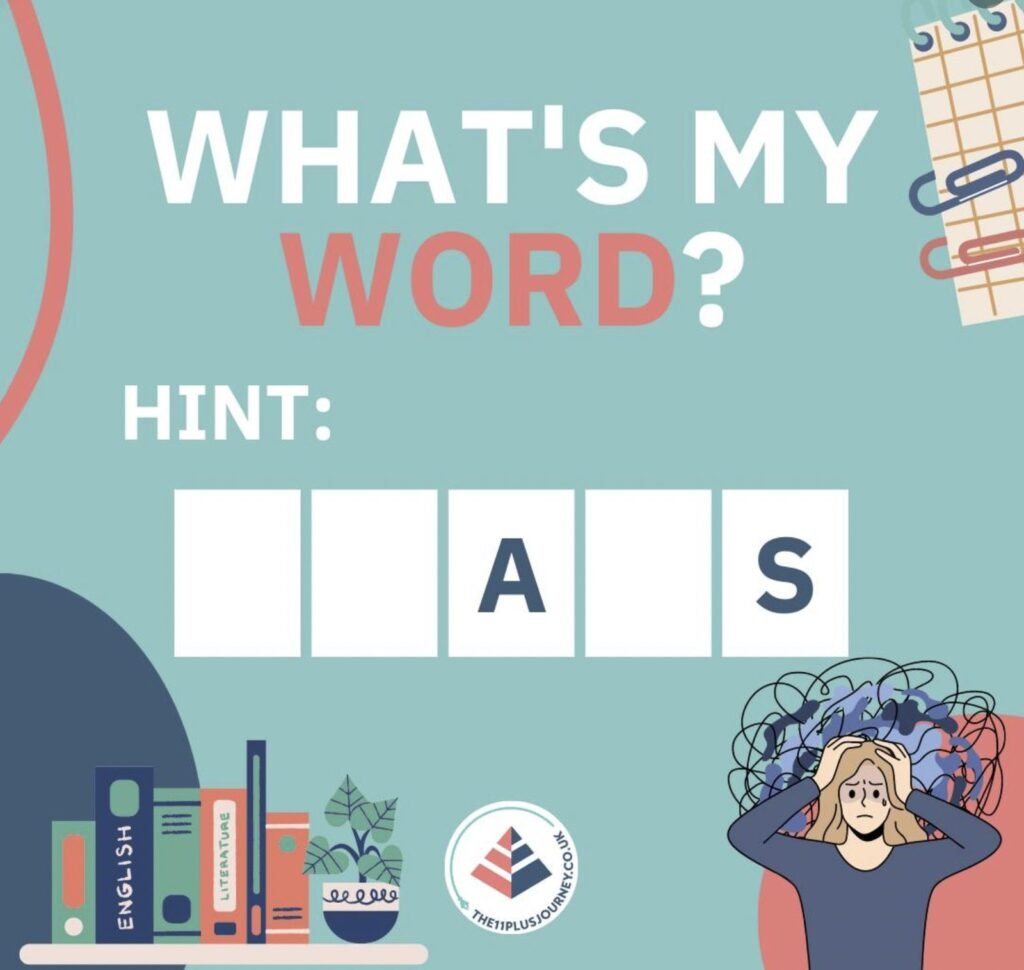
For example, a “What’s My Word” style game.
You describe a word using clues.
The child guesses it.
Or the other way around.
Now the child has to
- break the word down
- think about meaning
- connect ideas
They are working backwards.
And that is exactly what they need to do in an exam.
If You Take One Thing From This…
Go deep into words.
Not wide or rushed, but go deep.
Because when a child understands words properly, everything changes:
- Comprehension improves
- Verbal reasoning becomes clearer
- Confidence increases
And most importantly…
They stop feeling stuck.
If this has resonated with you, there are a few ways you can take this further.
Vocabulary to Comprehension Challenge (April)
This is exactly what we focus on.
How vocabulary actually feeds into comprehension.
How children can work things out
Even when they haven’t seen something before.
There are only a few spaces left now.
You can find the details here
https://the11plusjourney.co.uk/product/the-vocabulary-to-comprehension-challenge-april-2026/
Verbal Reasoning Masterclass (May)
If your child is preparing for exams that include reasoning, this is the next step.
We’ve already started taking bookings, and it builds directly on these skills.
https://the11plusjourney.co.uk/product/11-verbal-reasoning-holiday-mastery-classes/
Vocabulary Resources for Home
If you prefer to start at home, I’ve put together a full list of vocabulary books, tools and resources (including the “What’s My Word” approach many parents use daily)
https://the11plusjourney.co.uk/11-vocabulary-books-apps-websites-and-word-lists/
If you’re unsure where to start, feel free to message me, Sabah, directly on WhatsApp .